Monday, November 23, 2009

The Formation of the Crab Nebula


The Crab Nebula started out as a Protostar, which is a very big star. That Protostar grew into a Supergiant star, which is 30 to 1000 times bigger than our own sun (which is a Yellow Dwarf). The Supergiant had a Supernova (which is when a Supergiant star explodes) and collapsed on itself. Eventually, the remains of the Supergiant became the Crab Nebula.

Monday, November 9, 2009

Planet?


Pluto. The ninth planet. Or it was until a few years ago when scientists confirmed that it was, in fact, not a planet. Pluto isn't a planet because, in order to be a planet, you have to:

1.) Orbit around a star.
(Pluto does this, so it might be a planet...)

2.) Have enough gravity to pull itself into a spherical shape.
(...Pluto does this too, so maybe...)

3.) "Clear the neighborhood" of its orbit.
(...Oh no! This is the only thing Pluto has unchecked! It's, sadly, not a planet.)

The Crab Nebula is not a planet because it doesn't orbit around a star, it's not a sphere, and it doesn't really have an orbit. But that's okay, because its massive size makes it awesomer than a planet!


[Sidenote to Pluto--
It's okay, Pluto. I'm not a planet either ;)
]

Wednesday, November 4, 2009

Crab Nebula: Size

The diameter of the Crab Nebula is 104,068,035,198,388.8 kilometers (or eleven light years). It's so big, that it can't even fit into the sun! The sun can fit into the Crab Nebula 74,815,267 times!!! That is a VERYYYYYY big nebula. If i could, I would post a picture of the Crab Nebula in comparison to the sun, or a planet, but I searched for an image of that and Google failed me. (I know very sad and disapointing...Google promised not to fail anyone!!! LIES!!!) I will continue my search though!!! But for now, we just know that the Crab Nebula is very, VERY, VERY big!

Wednesday, October 28, 2009

AMNH Experience


On Monday, October 26, 2009, my class visited the American Museum of Natural History. When we went to the Rose Hall for Earth and Space, i learned about my weight on different planets and moons, but I couldn't find any information on the Crab Nebula. In the Hall of Meteorites, me and a bunch of other people went searching for the answers on our sheet and learned a lot about Cape York. In the "Journey to the Stars" movie, I sat back and relaxed while taking an exciting journey through space while learning about stars.
While in the museum, i learned about Cape York (what it is and when it happened). I also learned about different types of stars (when they are born, how long they live, how/when they die). I also about what meteorites are and where they come from.
The only to questions i have left after our visit are ones that I couldn't find the answers to. Where is my nebula? (I couldn't find ANY information!) And why is my nebula called the "Crab" Nebula? (Is it in the constelation of Cancer the Crab?)

Tuesday, October 20, 2009

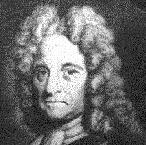
Who Discovered the Crab Nebula?


Source: google images
John Bevis discovered the crab nebula. He discovered it in 1731, along with a few other bodies in our solar system. He lived from the late 1600's to the early/mid 1700's.